
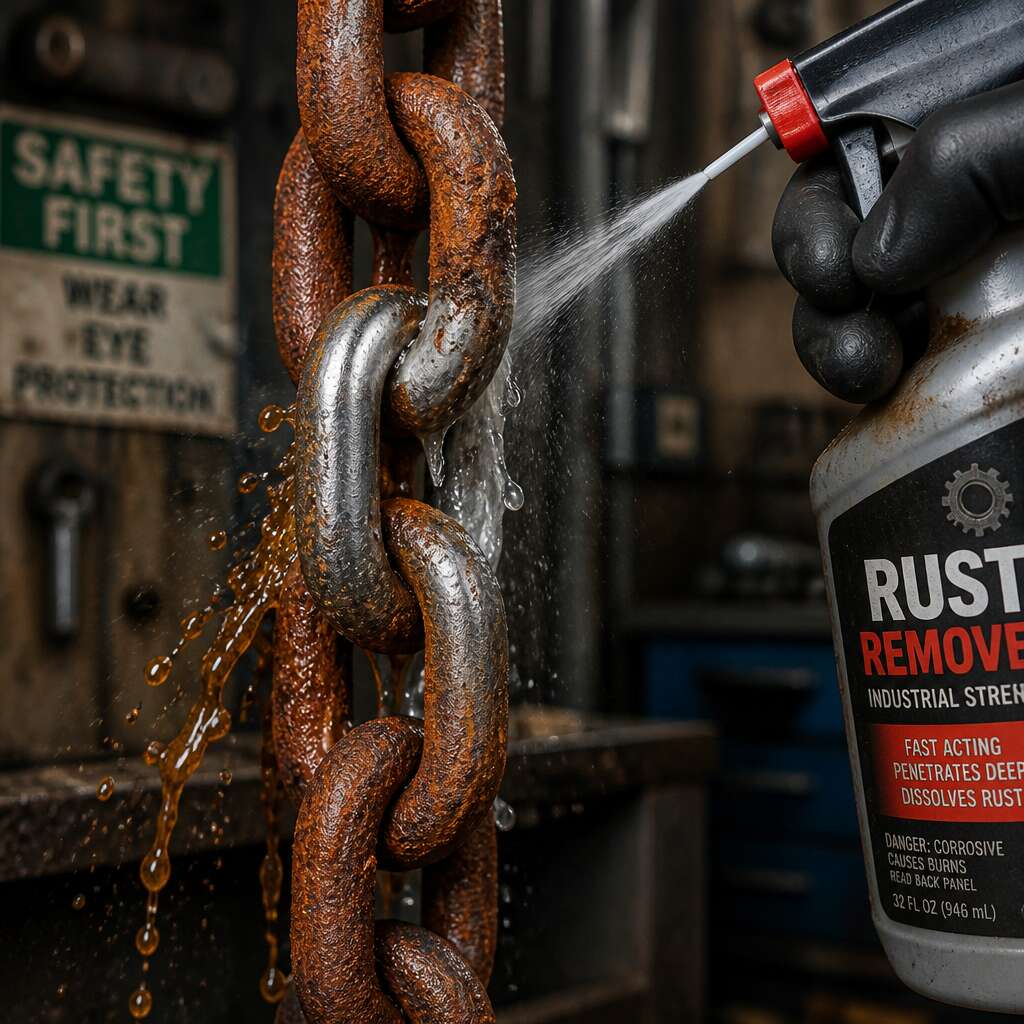
Understanding the Rust Problem in Kimberley
How Coastal Humidity Accelerates Corrosion
Kimberley’s semi-arid air feels trustworthy. It isn’t! When summer thunderclouds gather over the Northern Cape, relative humidity climbs past 60 per cent, the threshold where steel begins to corrode. A single night of moisture can undo months of apparent stability.
The corrosion process is relentless once it starts. A film of water settles on metal, dissolves iron ions, and creates an electrochemical cell. Dust from the region’s mining activity or the surrounding Kalahari sand holds that moisture in place, extending the reaction long after the sun returns. Sharp diurnal temperature swings cause condensation to form at dawn on every exposed surface.
For the farmer’s trailer, the workshop’s lifting gear, the church’s iron gates, decay accelerates. I’ve seen machinery that looked sound in winter turn orange by spring. This is why a heavy duty rust remover Kimberley must pair with vigilance about humidity and consistent application.
Common Rust Hotspots in Kimberley Homes and Businesses
Kimberley hides its rust in plain sight. The city’s original ironwork, some of it imported from Europe during the diamond rush, now carries a century of patina. But the modern corrosion problem is far less romantic. It lives in the water tanks perched on township rooftops, in the steel frames of agricultural machinery parked under camel thorn trees, and in the reinforced concrete of parking garages where chloride from the dust penetrates the rebar.
The rust in Kimberley is localised and particular. It clusters where metal meets masonry, like wall plates and roof trusses in older buildings. It thrives in the shadowed voids of storerooms and workshops. And it grips the undersides of vehicles and trailers, where road grit mixes with morning dew.
The practical implications are wide ranging:
– Corrugated iron roofs failing at the fastener points, silently loosening their grip.
– Security gates stiffening at the hinges, their bars weakening at ground level.
– Load bearing beams in warehouses shedding scale, piece by piece.
Each hotspot shares a common failure. Moisture finds a vantage point, settles, and oxidises the steel. That is why a heavy duty rust remover Kimberley must reach these exact points, and why local application matters more than imported theory.
The Difference Between Surface Rust and Deep Corrosion
The rust that covers a bumper or a gate in Kimberley often looks worse than it is. Surface rust, the kind that forms when moisture kisses bare steel for a few weeks, still leaves the metal’s core intact. You can scrape it off with a wire brush and find a dull but solid surface underneath. Deep corrosion is a different creature, one that has gnawed its way into the grain of the steel itself. It creates pits and laminations, and it often hides beneath a seemingly harmless coating of paint. The visual difference is subtle, but the structural difference is immense. Surface rust is an aesthetic problem. Deep corrosion is a load bearing failure waiting to happen.
Telling the two apart requires more than a glance. For the homeowner or the workshop foreman, the distinction is critical because it determines whether a heavy duty rust remover Kimberley can restore the metal or whether the piece must be cut out and replaced. Consider the signs:
– Surface rust flakes off easily and leaves a uniform, rough texture that feels like sandpaper.
– Deep corrosion produces sharp edges, pockmarks, and a darker, almost charcoal colour that resists scratching.
– Surface rust sits only on top, while deep corrosion causes the steel to ring dull when tapped with a hammer.
The danger is self deception. A thick layer of surface scale can conceal a catastrophic loss of metal beneath it. In Kimberley, where the dry heat encourages paint to crack and peel, the underlying steel is exposed to accelerated oxidation. What begins as a cosmetic issue on a water tank or a trailer chassis quickly becomes a structural liability. This is why the conversation about any heavy duty rust remover in Kimberley must begin with an honest assessment of the damage. You do not treat a deep pit the same way you treat a dirty surface. The product must be able to penetrate, dissolve, and neutralise. If it cannot reach the base of the corrosion, the rust will simply return. The metal will continue to lose its thickness, and the silent erosion will continue.
Why Standard Cleaners Fail on Heavy Corrosion
Call rust a mole and the metaphor stops at the skin. Kimberley’s rust has a doctorate in hide and seek. The arid city fools newcomers into complacency, yet the dry heat does not preserve steel, it bakes the protective coatings until they shatter. A truck chassis that looked respectable in May can resemble a geological dig site by September.
The failure of standard cleaners is not a mystery. It is a matter of depth. A general-purpose spray or a household acid will dissolve the fluffy orange dust on the surface. That is the easy part. The corrosion that matters, the crystalline, brittle crust that has bonded with the steel, requires a chemical reaction strong enough to break the molecular bond. Standard cleaners do not do this. They merely wet the metal and hope for the best.
Three realities govern the rust problem in this region:
– Kimberley’s temperature swings cause metals to expand and contract, widening micro-cracks.
– The winter air carries fine dust that absorbs moisture and holds it against bare steel.
– Standard cleaners lack the dwell time to penetrate a thick oxide layer before evaporating.
Rust forms with one formula: metal plus water plus time. Heavy corrosion forms with a different formula: metal plus water plus patience. The standard cleaner is a sprint. The rust is a marathon. The chemistry has to match the ambition of the problem. This is why a heavy duty rust remover in Kimberley needs to be more than a clever name on a label. It needs to be a solvent, an acid, and a neutraliser in one action. Anything less simply paints over the problem and calls it a cure. The steel knows better. The rust is already shaking its head.
Selecting the Right Heavy-Duty Rust Removal Solution
Chemical vs. Electrolytic Rust Removal Methods
Nothing says “I love my car” like watching rust eat it alive. When corrosion digs in deep in Kimberley’s heat, you need a heavy duty rust remover Kimberley locals actually trust. But before you drown the part in acid, ask yourself: chemical or electrolytic? Chemical removers are fast and forgiving, perfect for delicate chrome or detailed castings. Electrolytic methods, on the other hand, use a low voltage current to strip rust clean off, leaving bare metal that’s ready for paint. Both work, but they’re not interchangeable. Consider your situation:
– Chemical: better for small, intricate items; requires rinsing and neutralising.
– Electrolytic: safer for thick steel; needs a tank, a battery charger, and a bucket of patience.
I’ve seen blokes ruin a 1960s diff housing by using the wrong method. The right pick comes down to your metal’s thickness and your timeline. Choose with care, because rust never takes a day off.
Indicators of a Powerful Industrial-Grade Formula
There is a moment when a rust remover either commits or quits. The weak ones bubble and foam, then leave a brown haze behind. A heavy duty rust remover Kimberley mechanics rely on should show strength immediately.
Indicators of a powerful industrial-grade formula:
1. It penetrates layered scale instead of sitting on top.
2. It works at ambient temperatures, no heating required.
3. It rinses clean without leaving a film that blocks primer.
These are the markers. If the chemical needs constant reapplication to do what should take one pass, it is not the tool for the job. Selecting the right solution means reading the label for active ingredients, not marketing language.
Compatibility with Different Metal Alloys
When a steel bracket meets an aluminium housing, the rust remover must work on both without sacrificing either. That mixed-metal reality is common across Kimberley workshops, where vehicles and machinery join dissimilar alloys in tight assemblies.
A heavy duty rust remover Kimberley mechanics use must account for these differences. Caustic blends can etch aluminium while they lift scale from cast iron. Acidic formulations may leave carbon steel clean but corrode zinc coatings on galvanised components.
Each substrate has a tolerance threshold:
– Cast iron accepts deep chemical penetration without surface degradation
– Aluminium alloy resists oxidising agents poorly and needs lower concentrations
– Galvanised steel requires neutral pH to preserve the sacrificial zinc layer
The correct formulation balances chelation rates against base-metal preservation. Effective rust removal leaves the underlying alloy untouched, ready for primer or paint.
Fast-Acting Concentrates and Soaking Compounds
Fast-acting concentrates and soaking compounds serve different corrosion scenarios. A concentrate works when time is short and the oxide layer yields quickly. A soaking compound, by contrast, sits on the workpiece for hours, dissolving deep corrosion in stages.
In Kimberley, the choice between them often comes down to part geometry. A brake caliper with tight internal passages favours a low-viscosity concentrate. A leaf spring with layered scale rewards the prolonged contact of a soak. The heavy duty rust remover Kimberley workshops stock usually includes both forms for this reason.
- Concentration ratios determine how aggressively a product attacks oxide without attacking the base metal.
- Soaking compounds need a stable working temperature to perform consistently.
- Disposal requirements matter in a workshop environment.
No single product serves every corrosion profile, which is why a heavy duty rust remover Kimberley mechanic reads the rust’s depth before choosing a method. Fast-acting options suit surface flash rust and tight assemblies. Soaking compounds suit components that can stay out of service for a day or more.
Readily Available Product Forms for Kimberley Shoppers
Rust does not care about packaging. The person applying the remover should. A shopper in Kimberley finds rust removers in several physical forms. Liquids pour into tanks and submerged parts. Gels cling to vertical panels and chassis rails. Sprays reach awkward corners without disassembly. The heavy duty rust remover Kimberley hardware stores stock covers this range.
Selection starts with the job’s position. A horizontal workbench part accepts a liquid. An upright trailer frame needs a gel that stays put. A suspension bracket still on the vehicle needs a spray that penetrates without running. Consider the common forms!
- Liquid concentrates for immersion tanks
- Thick gels for vertical panels
- Aerosol sprays for cavity work
- Wipes for small components
Packaging matters too. Resealable containers preserve shelf life; single-use formats prevent contamination of the bulk supply. The heavy duty rust remover Kimberley buyer who matches product form to rusted part geometry gets better results.
Step-by-Step Application Techniques for Stubborn Rust
Preparing the Affected Metal Surface Prior to Treatment
Surface preparation determines whether any rust treatment succeeds or fails quietly. A dirty panel will reject the chemistry before it can work. Begin by wiping away grease and dust with a lint-free cloth soaked in mineral spirits. Then attack the friable flakes.
- Scrape away thick, brittle corrosion with a putty knife
- Brush the remaining film with a stiff wire brush
- Wipe the surface again to remove fine particles
Every speck of debris creates a barrier. Once the metal is bare and dry, the heavy duty rust remover Kimberley can penetrate the remaining corrosion rather than sliding over surface grime. I have watched people apply quality products to unprepared metal and blame the product for their own impatience. Do not be that person. A few minutes of preparation saves hours of rework.
Using Soaking, Brushing, and Spraying Approaches
Some rust laughs at rags and cursing. Soaking ends that. If the part is removable, place it in a plastic tub and cover it with heavy duty rust remover Kimberley. Check progress every twenty minutes. Deep scale may need an overnight soak.
For fixed panels, brushing wins. Load a stiff nylon brush with product and work it into the pits. The bristles force chemistry underneath the crust.
Spraying covers awkward geometry. Narrow channels and vertical faces benefit from an aerosol delivery.
The order matters:
1. Soak removable components first
2. Brush embedded corrosion on anchored metal
3. Spray broad surfaces last to flush loose debris
Each method serves one goal, breaking the bond between rust and steel.
Working in Kimberley’s Cooler Months for Better Results
Kimberley’s frosty mornings change how chemistry behaves. Cold slows the chelation process, so a heavy duty rust remover Kimberley contractors rely on needs more time to penetrate. Do not shorten the soak. Instead, extend it by a third when the mercury drops below 10 degrees.
Work in manageable patches. The sequence matters:
- Apply the product to dry metal before condensation forms
- Let it sit twenty minutes longer than the label states
- Agitate with a brass brush while the film is still wet
- Wipe once, then repeat on any remaining scale
The cooler air also reduces flash evaporation, which works in your favour. The remover stays wet and active longer. That extra dwell time breaks bonds that summer applications would rush. A heavy duty rust remover Kimberley users leave out overnight performs steadily, hour after hour, even when the temperature drops. Patience replaces elbow grease.
Neutralizing the Chemical After Rust Dissolves
Stubborn rust does not lift away in one application. It embeds itself in pitted metal, beneath scale, and inside crevices where a brush cannot reach. The technique determines whether the heavy duty rust remover Kimberley workshops stock performs or fails. Work in hand-sized sections. Follow this order:
- Apply the product with a saturated cloth so it clings to vertical surfaces.
- Wait until the rust softens into dark grey sludge.
- Agitate with short, overlapping strokes of a brass brush.
Rinse the residue away. Neutralization follows immediately. Most formulas leave an acidic film that will re-ignite corrosion within hours. A solution of warm water and bicarbonate stops the reaction. Wipe the metal dry. I have watched repairs fail weeks later because someone skipped this step. The final step decides between a lasting repair and fresh corrosion.
Post-Treatment Rinsing and Drying Protocols
In my workshop, mastering a heavy duty rust remover Kimberley requires more than pouring liquid on rust. Work in diagonal bands no wider than your hand. Brush the chemical into the grain of the metal, letting it foam for ten minutes. Then follow this sequence:
- Scrape off any brittle layers with a paint knife.
- Reapply the formula only to exposed pits.
- Wait until the surface looks like wet slate.
After the reaction completes, rinsing protocols decide the repair’s fate. Use tepid water at low pressure. Flood the entire panel, not just the treated zone. Acid residues migrate. Then dry with a clean cotton rag in straight strokes. For corners and bolt holes, use a compressed air nozzle set to 40 psi. Do not let moisture stand. A heavy duty rust remover Kimberley will strip corrosion, but only a fast drying routine protects the bare steel underneath.
Safety Precautions and Environmental Compliance
Protective Gear Essential for Handling Acidic Removers
Acid solutions are brutally effective, which means the same heavy duty rust remover Kimberley relies on for stubborn corrosion can be unforgiving on exposed skin. I have seen too many folks skip the basics! Your safety routine matters as much as the chemical itself.
Before opening any container, gear up with:
- Nitrile or neoprene gloves that resist penetration, not thin latex.
- Sealed safety goggles to block airborne droplets.
- A half mask respirator with acid gas filters for low ventilation areas.
Environmental compliance in Kimberley requires you to collect used acid and neutralised residues, then dispose of them through approved waste streams. Never pour spent solutions down drains. The mineral rich soils here amplify contamination risks, so treat every drop with caution.
Proper Ventilation and Disposal Guidelines in Kimberley
Kimberley’s semi arid air evaporates fumes faster than coastal humidity slows reactions. But a heavy duty rust remover Kimberley formula releases acidic vapours that linger in still corners. Cross ventilation matters more than an open window! Position fans to push air away from your breathing zone, and keep a wash down area with a lined catch basin.
Spent acid and neutralised residue are compliance matters, not cleanup chores. The mineral rich soil around Kimberley drains fast, so a careless pour travels further than you think. Collect used solution in approved containers and route it to registered waste streams.
- Confirm your disposal contractor handles acidic chemicals.
- Keep neutralising agents nearby to stop spills early.
- Seal drums tightly before transport.
Rinse water from treated parts deserves the same caution. If it touched the heavy duty rust remover Kimberley solution, it counts as chemical waste.
Choosing Eco-Friendly Rust Removal Alternatives
Every litre of spent acid that leaves a Kimberley workshop creates a disposal problem. Eco-friendly rust removal alternatives strip corrosion without leaving hazardous residues. Products based on citrus solvents or gentle chelators bind rust molecules and pull them into solution, where they can be filtered and disposed of as solid waste. This approach minimises groundwater contamination risks in Kimberley’s fast draining soils.
For moderate corrosion, a heavy duty rust remover Kimberley workshops rely on may still contain aggressive chemistry. Yet biodegradable formulas now match traditional acid speed without long term liabilities. They require the same vigilance, however:
- Store eco-friendly removers away from oxidising agents.
- Never mix them with bleach or ammonia.
- Verify local waste handlers accept neutralised organic residues.
In my experience, choosing these products reduces your compliance burden while protecting the aquifer that sustains this region. The shift is practical, not ideological!
Storing Chemicals Safely Away from Children and Pets
Children and pets explore with their mouths, which turns any stray bottle into a potential crisis. In Kimberley, where workshops often sit close to living spaces, a heavy duty rust remover Kimberley operators trust requires strict storage discipline. Locked cabinets, out of reach and out of sight, are the first line of defence.
High shelves work only if they are stable and inaccessible. Always keep the product in its original container with the label intact. Transferring it into a water bottle is a terrible idea. Spills happen, so wipe them immediately because dogs will lick wet concrete. The same rules apply whether the product is acidic or biodegradable. Your family does not read hazard icons. Neither does your cat.
Understanding Local Waste Disposal Regulations
In the workshop, the debate over breathing versus scrubbing is settled by ventilation. Where you mix the heavy duty rust remover Kimberley relies on an open door and shifting air, not on hope. An acidic reaction produces vapors that settle low and travel along benches. That concentration bends around corners and into tool boxes, leaving corrosion on steel chisels.
The chemicals matter less than the discipline applied to them. Neutralization and rinsing protect a drain line from a reactive surge. But catapulting that liquid into the storm water system is a violation, not a convenience. In Kimberley, municipal bylaws treat contaminant discharge with exact language: no acidic, alkaline, or heavy metal residue enters public drains. The city interprets that as any water leaving the property.
- Let the neutralized solution evaporate in a marked tray, then scrape the dried salts into a sealed container.
- Take that container to the hazardous waste drop-off at the municipal depot.
- Reuse the working bath until it is spent, which reduces volume and cost.
Pouring spent remover onto gravel or garden soil poisons the root zone, and the contamination moves with rain. Lead and chromium from the dissolved rust do not break down. They bind to sediment and persist. That is not an acceptable trade for a clean bolt.
Each bottle of heavy duty rust remover Kimberley shops rotate through carries a responsibility measured in future water quality. Labeling and storage follow you, but so does the final destination of the waste. Read the local waste disposal schedules before mixing your first batch.
Preventive Measures to Keep Rust from Returning
Applying Protective Coatings and Primers
Steel that looks pristine after treatment can still corrode within weeks if left unprotected. Roughly 70 percent of rust reoccurrence traces back to skipping the coating phase. After your heavy duty rust remover Kimberley treatment strips away corrosion, the bare metal surface is highly reactive and vulnerable to oxidation.
Applying a primer creates a chemical barrier that resists moisture and oxygen. For exterior surfaces in Kimberley’s coastal humidity, use a zinc-rich epoxy primer for sacrificial protection. Follow with a topcoat that matches the metal’s flexibility, especially for corrugated iron roofs and vehicle panels. A reliable coating system includes:
- Surface etching primer for smooth alloys
- Polyurethane topcoat for UV resistance
- Wax-based sealant for interior components
Each layer serves a distinct function. The primer bonds to the metal, the topcoat blocks UV rays, and the sealant repels condensation. Reapply these layers every 18 to 24 months. A second round with heavy duty rust remover Kimberley becomes unnecessary when the coating remains intact.
Regular Inspection Routines for Outdoor Equipment
For every hour spent with a grinder or acid bath, set aside ten minutes for vigilance. Outdoor equipment in Kimberley’s climate demands a monthly ritual: walk the perimeter, run a hand along edges, and look for the orange bloom that signals moisture has breached the paint. A flashlight reveals early pitting in bolt holes and welds.
Regular inspection routines for outdoor equipment also mean cleaning debris from crevices. Leaves and dirt hold humidity against steel, accelerating oxidation. After each wash, dry every surface completely. Track your findings in a simple log; the date and location of each spot helps predict weak zones.
- Check hinges, chains, and locking mechanisms
- Probe seams where two metals meet
- Inspect underneath equipment, not just the top
When corrosion appears despite these efforts, a targeted application of heavy duty rust remover Kimberley solves only the visible patch. The real fix lies in your inspection rhythm, catching issues before they spread inward.
Managing Moisture Levels in Garages and Workshops
A garage in Kimberley sweats quietly. Condensation gathers on bare metal overnight, and that dampness invites rust back within weeks. I have watched treated surfaces bloom again from this moisture. To keep corrosion from returning, manage the microclimate around your equipment.
Ventilation matters more than owners assume. Open a window on dry days and run a fan during humid spells. Dehumidifiers help, but storing items off concrete floors reduces exposure.
- Wipe down metal surfaces after every shift.
- Place moisture absorbers near stored machinery.
- Seal garage floors with a concrete sealer.
When condensation still wins, a targeted application of heavy duty rust remover Kimberley handles the patch, yet prevention depends on steady humidity control. Check your workshop’s air regularly and act before the damp settles!
Leveraging Rust Inhibitors for Long-Term Protection
Removing corrosion solves only part of the problem. The other half demands a barrier that outlasts the clean metal finish. Rust inhibitors containing zinc or phosphate compounds bond at a molecular level and alter the surface’s electrochemical behaviour. The inhibitor integrates with the substrate and sacrifices itself before the steel underneath.
Application should follow the manufacturer’s contact time recommendations. Thick, even coats outperform hurried passes. For equipment that sits idle for weeks, consider:
- A wax-based inhibitor for stored machinery
- A thin oil film for bare steel surfaces
- A wash-coat primer before final painting
Using a heavy duty rust remover Kimberley once a year handles established corrosion, but the zinc-rich inhibitor applied directly afterward is what keeps rust from returning each season.
0 Comments