
Understanding Rust and Its Causes
Why Rust Forms on Metal
Rust is not a mystery; it is a chemical reaction with a timetable. When iron contacts oxygen and water, it forms a brittle oxide that eats into the metal. In East London, the humid coastal air speeds up this process. Salt from the ocean lowers the electrical resistance, making the reaction nearly unavoidable.
Several factors trigger or worsen corrosion:
- Exposure to saltwater or salt-laden air
- Scratches that break the protective coating
- Prolonged dampness or poor ventilation
Each of these conditions creates a perfect environment for iron to surrender its electrons. Understanding these causes helps you select effective rust removal products East London. The right product targets the specific type of corrosion you face.
Common Rust-Prone Areas in Coastal Climates
Coastal corrosion rates run five to ten times higher than inland zones. East London’s position along the Indian Ocean leaves gates, scaffolding, and machinery under a constant film of saline moisture. Oxidation often establishes itself beneath paint layers, hidden until the surface buckles. Visible flaking is the endpoint, not the origin.
Rust-prone areas multiply closer to the shoreline:
- Vehicle undercarriages exposed to wet sand and ocean spray
- Roofing sheets and gutters trapping salt residue from coastal fog
- Gate hinges, bolts, and fasteners on perimeter fencing
- Industrial equipment standing near the harbour or river mouth
These zones demand rust removal products East London formulated for prolonged salt exposure. Each suburb holds a different microclimate. Areas facing prevailing winds endure heavier salt loads. Sheltered industrial districts mix humidity with airborne pollutants. Reading the local environment matters as much as the chemistry of the treatment itself.
How to Assess the Severity of Rust Damage
Corrosion destroys a quarter of the world’s steel each year, yet damage starts invisibly. In East London, salt-laden air accelerates the process. The chemistry matters less than the diagnosis; assessment begins with observation.
Start by testing the surface. A light scrape with a screwdriver tells you more than any photograph. Surface discolouration suggests shallow oxide. Pitting, flaking, or black spots indicate deeper deterioration. Tap the metal with a small hammer. A dull thud means corrosion has spread; a clear ring signals sound material.
Classify the damage using this scale:
- Surface oxidation that brushes off without residue.
- Localised rust that has penetrated the surface but retains structural thickness.
- Penetrative rust where holes or weak spots are visible.
Accurate assessment ensures you buy rust removal products East London that match the actual condition. Overestimating wastes acid; underestimating leaves corrosion active. For surface cases, standard rust removal products East London are sufficient.
Types of Rust Treatment Solutions
Chemical Rust Removers and Their Formulations
Metal does not decay by accident. Rust is a patient appetite, one that South African coastal air feeds with salt and humidity. When you finally turn your attention to it, the true agents of battle are the chemicals you choose, and the formulations they arrive in offer very different levels of ferocity.
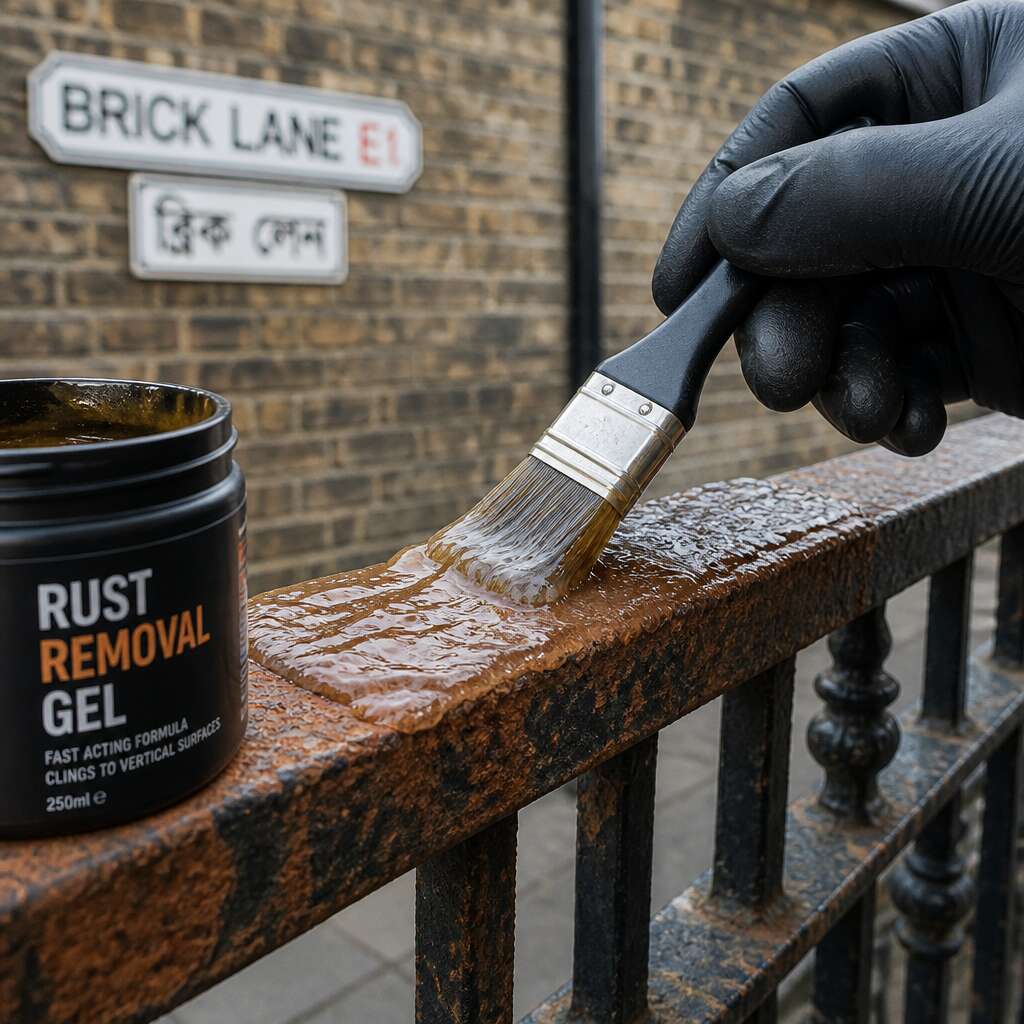
The most common chemical family relies on phosphoric acid. This compound does more than strip corrosion away, it converts iron oxide into a stable, dark layer that can be painted over directly. You will find it as a liquid, which is ideal for soaking smaller components, or as a thick gel that clings to vertical surfaces and nooks where a brush cannot reach. For anyone sourcing rust removal products East London, this gel is often the first line of defence, sparing you the labour of repeated grinding.
Beyond phosphoric acid, there is a darker, more aggressive category for severe cases. These treatments include:
– Oxalic acid, which works efficiently on marine-grade steel and stainless alloys, leaving a clean, bright surface.
– Citric acid blends, a milder but effective alternative for delicate metalwork where you fear etching the base material.
– Chelating agents, which bind to the rust molecule itself, lifting it away without disrupting the healthy metal beneath.
Choosing between them is not about preference, it is about the metal’s tolerance and the depth of the corrosion. A single wash might suffice for flash rust, while a deep, scaly infection demands a soak in a stronger concentration. The right supplier will guide you through these formulations, and in East London, the availability of these specific rust removal products East London means you rarely have to compromise. Pay attention to reaction times and temperature, as colder weather slows the chemistry, leaving you to wait for a transformation that is always worth the patience.
Abrasive Tools and Mechanical Methods
Some corrosion refuses to dissolve, no matter how competent the chemistry. I have watched a wire brush skip across a thick scale of rust, leaving the surface almost unchanged. That is when mechanical methods earn their place. Angle grinders with flap discs strip heavy layers in minutes. Needle descalers reach into pitted metal. Sandblasting remains the fastest option for large panels or structural steel.
Here is what I typically keep on hand for the initial attack:
- A coarse flap disc for heavy scale
- A needle scaler for tight corners
- A cup brush for flat surfaces
- A vacuum shroud to control the dust
After the abrasive work, a chemical pass is still necessary to neutralise what remains in the pits. Anyone sourcing rust removal products East London knows this sequence works. The city’s better suppliers of rust removal products East London understand that mechanical work without chemistry leaves a surface vulnerable to flash rust within days.
Eco-Friendly and Natural Rust Dissolvers
Not every corrosion problem demands aggressive chemistry. Eco-friendly and natural rust dissolvers handle light surface rust with far less risk to the user and the environment. Citric acid chelates iron oxide without producing toxic fumes. White vinegar works on small components when given enough soaking time. Molasses based solutions offer a slower but surprisingly thorough approach for intricate items.
These gentler options suit domestic settings where a homeowner might be restoring a gate or a vintage bicycle frame. Many who search for rust removal products East London now ask for these alternatives explicitly. Suppliers in the area have responded with ranges that are biodegradable and safe around children and pets.
A typical natural treatment sequence might be:
- Clean the part with a degreaser first
- Submerge it in the chosen solution overnight
- Scrub remaining residue with a nylon brush
- Rinse and dry immediately
The trade-off is time. Natural dissolvers work slower than their synthetic counterparts, and I have found they spare the surrounding material and your lungs. Patience here pays off!
Specialised Products for Automotive and Marine Use
Marine environments are unforgiving. Salt air and spray accelerate corrosion on vehicles and vessels with alarming speed. The automotive and boating sectors demand tougher solutions than household products can provide. Specialist rust removal products East London suppliers stock include phosphoric acid based converters, which neutralise existing corrosion and leave a primed surface. These are ideal for chassis repairs and panel work before repainting.
For marine applications, the game changes entirely. Zinc-rich primers and electrolytic rust converters offer sacrificial protection that withstands constant saltwater exposure. Boat owners often use products that convert rust chemically and create a barrier against future oxidation. When selecting these heavier treatments, consider the following factors:
- Surface preparation requirements before application
- Compatibility with existing paints and coatings
- Reapplication intervals in high-salt environments
- Disposal regulations for chemical residue
Cavity waxes and lanolin sprays protect internal sections of vehicle frames where abrasive methods cannot reach. The difference between a quick fix and a lasting restoration lies in matching the product to the specific metal condition. Anyone investing in a classic car or a fishing boat should prioritise corrosion management from day one. The right rust removal products East London workshops rely on often make the difference between a thirty-year hull and a three-year hull.
How to Choose the Right Rust Treatment
Factors to Consider Based on Metal Type
Choosing a rust treatment demands an honest reckoning with what sits beneath the corrosion. Mild steel reacts differently than cast iron or aluminium, and this is where the wrong chemical can strip away more than just the oxide. You are not merely cleaning a surface; you are deciding how much original material remains worth preserving.
Consider the metal’s thickness, its alloying elements, and whether it bears a protective coating. For instance:
- Cast iron absorbs moisture deeply, requiring thicker gels.
- Galvanised steel loses its zinc layer to aggressive acids.
- Aluminium needs a formulation that won’t etch the base metal.
This is where selecting rust removal products East London demands local knowledge. Salt-laden air changes how each metal corrodes, so a treatment that works inland often fails near the coast. Read labels with suspicion and measure your own patience against the metal’s fragility. Some mornings the rust wins that match, and you simply try again!
Comparing Effectiveness and Cost
Corrosion costs South African industry an estimated R70 billion every year. I have watched people pick the cheapest bottle from rust removal products East London retailers, only to repeat the process three months later!
Effectiveness determines cost more than the price tag does. A gel that penetrates and neutralises in one application outperforms a thin liquid that demands multiple coats. Calculate per square metre, not per litre.
- Surface area covered per container
- Number of applications before bare metal shows
- Whether the product prevents flash rust after rinsing
The Eastern Cape’s marine atmosphere accelerates failure. Paying more upfront for a treatment that bonds properly saves money by the second season.
Reading Product Labels and Certifications
Labels often omit the details that matter. A bottle of rust removal products East London might boast “heavy duty” without listing the active chelating agent or its concentration. Certification reveals what marketing obscures. Look for SABS approval or an ISO 9001 manufacturing standard. These carry weight.
Check three things on any label:
- The exact active ingredient percentage
- The neutralisation method after stripping
- The corrosion inhibitor formulation for salt air exposure
If the label omits these, the product likely won’t survive the Eastern Cape’s humidity. I have seen a trusted brand print “phosphoric acid 30%” clearly, while a cheaper import hides it in fine print. Certifications matter because they force transparency!
Where to Buy Rust Treatment Supplies Locally
Independent Hardware Shops in East London
A shopkeeper in Quigney once told me that the flashiest labels do not always indicate the best rust removal products East London has to offer. The independent hardware shops scattered through Abbotsford hold their own particular stock, often sourced from lesser known suppliers. I have spent afternoons comparing the viscosity of gels and the sting of sprays at these counters, learning which products actually dissolve salt crust. These shops carry:
- Marine grade removers that tolerate humid coastal air
- Industrial concentrates sold in tin cans
- Companion items like scrapers and rust converters
The owner knows the humidity of the Buffalo River,and often recommends a specific brand accordingly. If you need a single litre for a garden gate, they will pour from a bulk drum. That flexibility is something a chain store cannot offer. I trust these independent suppliers over any glossy advertising.
Specialist Chemical and Abrasive Suppliers
Specialist chemical suppliers operate on a more industrial level than the corner shop. Their warehouses hold tannic acid preparations, phosphoric gel compounds, and abrasives that never reach retail shelves. I found one such supplier near the West Bank industrial zone, and they supply rust removal products East London shipyards and fishing trawler operators actually rely on. The staff test batches against salt-laden steel samples, so you can request a specific viscosity or drying time. Their stock includes:
– Cabinet blasting media in graded sizes
– Acid neutralisers for safe waste disposal
– Protective sealants compatible with freshly treated surfaces
For abrasive work, these suppliers often sell the equipment as well as the consumables. A 25kg bag of garnet costs less than a single branded spray can. Bring your own container and they will measure out smaller quantities. That flexibility matters when you need a precise solution for a specific job.
Online Marketplaces Offering Rapid Local Delivery
There is a peculiar dread in watching rust spread while a courier dawdles. Corrosion does not pause for logistics! That is why I now check online marketplaces offering rapid local delivery. East London sellers stock rust removal products East London, and they understand maritime humidity.
One seller near the Quigney area promised delivery within four hours. I watched a phosphoric gel arrive before the next tide. The key is filtering for local stock or same day dispatch.
- Seller ratings from marine trades
- Actual stock counts instead of drop shipping
- Free returns on damaged containers
These platforms reveal a direct contract between buyer and inventory holder, a transaction without warehouse anonymity.
Step-by-Step Rust Removal Process
Preparing the Surface and Protecting Surrounding Areas
A rust remover is only as good as the surface it meets. Before you open any rust removal products East London, prepare the metal thoroughly. Start by brushing away loose flakes with a wire brush. Wipe the surface with mineral spirits to remove grease. Then protect the surroundings. Mask adjacent panels, cover floors, and wear safety glasses. Here is my sequence:
- Brush off loose scale.
- Degrease with mineral spirits.
- Mask and shield.
- Apply your chosen remover.
This order prevents recontamination and keeps the chemical confined. In East London’s humid climate, a clean surface separates a permanent repair from a temporary cover.
Applying the Rust Remover Correctly
Temperature changes the chemistry. Phosphoric acid removers work best between 20 and 25 degrees Celsius. East London’s coastal air cools metal overnight, so morning application often fails to activate the formula. Wait until midday when the panel reaches stable warmth.
Rust removal products East London homeowners buy usually need a brush that resists acid. Nylon bristles hold up better than natural fibres. Work from the bottom upward so dissolved rust pushes ahead of the brush instead of pooling and reattaching.
- Shake the bottle, then pour a small amount into a disposable cup.
- Saturate the brush, not the metal.
- Spread a thin, even layer and let it sit until the colour shifts.
- Reapply only where rust has not fully dissolved.
The colour shift from orange to grey signals completion. Do not scrub during the dwell time. East London’s humidity keeps the remover wet longer, slowing the reaction. Give it time. Rinse with clean water once full dissolution appears.
Neutralising and Cleaning the Treated Area
Neutralising is where most DIY treatments fail, especially with East London’s mineral-heavy water. After the remover has acted, the metal remains chemically charged. Rinsing alone won’t restore balance. You need to shift the pH back to neutral using a diluted baking soda wash or a dedicated neutraliser from rust removal products East London suppliers.
- Rinse the panel with low-pressure water.
- Apply the neutraliser with a clean cloth.
- Wait five minutes, then wipe dry.
Once neutralised, dry the metal immediately. Coastal humidity will trigger flash rust within hours. Check for grey patches before any primer touches the surface. In my experience, a clean substrate forms the only reliable base for a protective coat.
Applying Rust Inhibitors and Protective Coatings
Once the metal is neutralised and dry, the clock starts ticking. Flash rust waits for no one. I always reach for a high quality rust inhibitor from rust removal products East London before any primer touches the surface. In this coastal city, where salt air accelerates corrosion, this step is non-negotiable.
The inhibitor sinks into the microscopic pores left behind by the removal process. It builds a molecular shield that blocks oxygen from reaching the steel. Apply it thinly and evenly, using a clean cloth to work it into tight corners. A brush can leave streaks that trap moisture.
- Stir the inhibitor thoroughly to distribute its active compounds.
- Lay down one even coat and let it cure completely.
- Inspect every surface under direct light for missed patches.
After the inhibitor cures, pick a protective coating that matches your local conditions. Suppliers of rust removal products East London stock epoxy primers and zinc-rich paints that withstand marine humidity. The coating seals the substrate, but only if the base remains stable. Match it to your metal type and the wear it will face for lasting protection.
Preventing Rust from Returning
Regular Maintenance Routines
A treated metal surface can oxidise within 72 hours in high humidity without a proactive maintenance schedule! The coastal air of East London carries salt loads that challenge protective layers.
I maintain a weekly habit of wiping down exposed metal surfaces with a dry cloth to remove hygroscopic salt deposits before they absorb moisture. My monthly inspection focuses on fasteners and weld seams, where early pitting hides under a thin film of surface rust.
- Inspect drainage channels for blockages that trap standing water
- Re-tighten any bolt that shows discoloration around its threads
- Apply a corrosion preventative spray to hinges and brackets
For the quarterly deeper maintenance, I visit local suppliers for rust removal products East London to refresh my stock of penetrants and passivators. The routine is unglamorous, but it preserves the integrity of the underlying steel.
Best Practices for Metal Storage
Salt air corrodes exposed metal within hours. Storing components without a deliberate strategy undoes every ounce of effort spent on surface preparation last month. Steel that sits in a damp corner of a workshop will regrow rust before you finish your coffee.
Store bare metal indoors where humidity stays below 45 percent. Keep it off concrete floors, which wick moisture upward. I prefer wooden pallets or rubber mats. Seal parts in vapor phase inhibitor paper for long term storage, and check the paper monthly for tears. A silica gel container inside a sealed crate absorbs what the air deposits.
- Leave gaps between stacked sheets for airflow.
- Mark storage dates to rotate stock.
- Wrap items individually when possible.
Revisit your rust removal products East London supply before each rainy season to have neutralisers ready. That is the quiet work that keeps corrosion from finding a foothold.
Environmental Controls for Moisture and Humidity
Humidity is the quiet saboteur. After you have invested in quality rust removal products East London, the air itself can undo your work within days. A workshop that feels dry to the skin may still hold enough moisture to trigger oxidation on bare steel.
Track relative humidity with a hygrometer. Dehumidifiers are worth the hum. Ventilation helps, but only when the outside air is not damp itself. Consider these controls:
- Keep indoor humidity below 45 percent.
- Place desiccant containers near stored metal.
- Warm the storage area slightly; warm air holds less moisture.
Even the best rust removal products East London cannot compete with a persistent coastal mist. Manage the environment and you extend the life of every treated surface.
When to Seek Professional Rust Treatment
Prevention is not a single action. It is a habit. Once the final coat cures, inspect every treated surface monthly. Look for the first flecks of brown, the first bubbling beneath the paint! Catching oxidation early means a quick touch-up, not another full treatment with rust removal products East London.
Professional intervention is the next step when the damage exceeds your equipment. Consider these warning signs:
- Rust has eaten through structural metal.
- Corrosion hides inside box sections or behind trim.
- The item supports weight or handles frequent stress.
- You have already treated the surface twice and the rust has returned.
A professional workshop can sandblast, chemically dip, or apply industrial coatings that rust removal products East London cannot match. They can also tell you when the metal is too far gone. That assessment alone is worth the call.
0 Comments